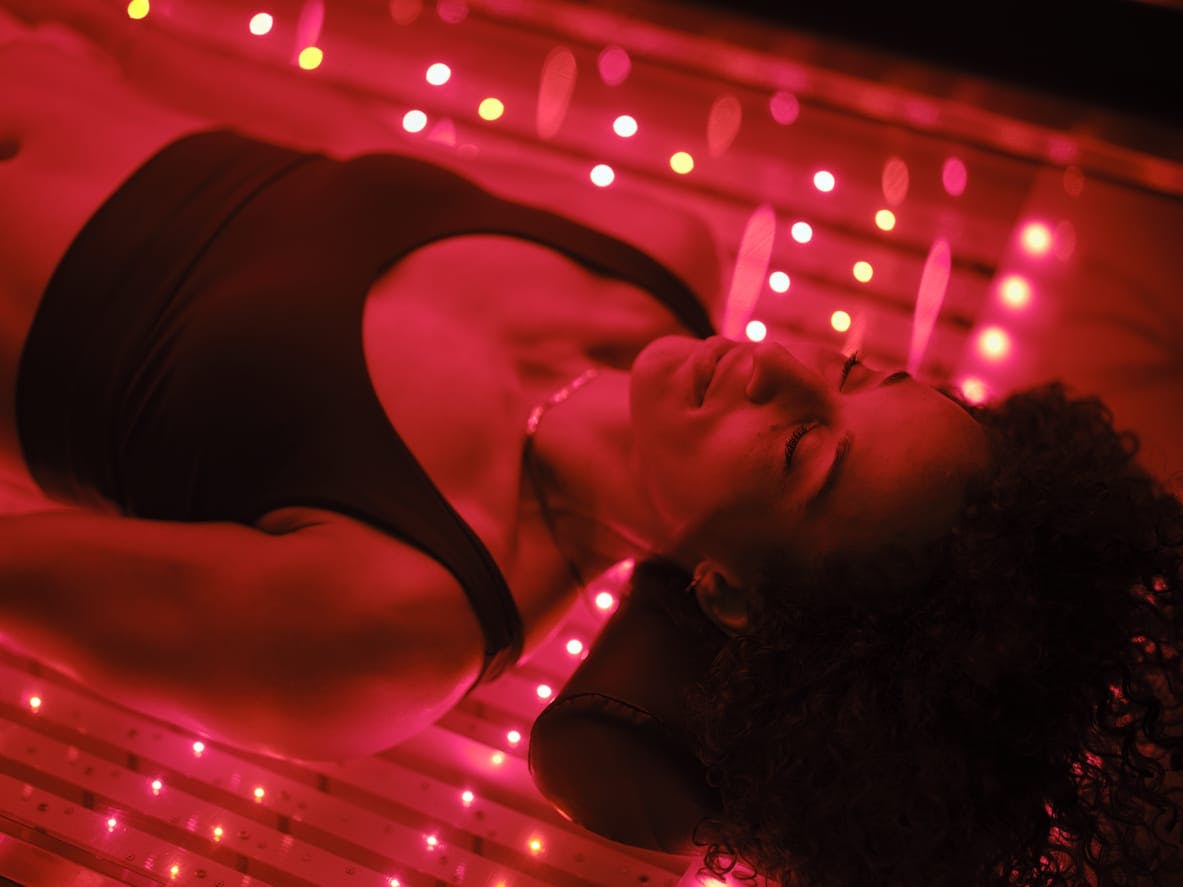
Red light therapy delivers clinically studied wavelengths of light deep into tissue, supporting skin health, cellular energy, and whole-body wellness with no downtime required.



The Science Behind the Light
Red light therapy (RLT), also known as photobiomodulation (PBM) or low-level laser therapy (LLLT), is a non-invasive treatment that uses specific wavelengths of red and near-infrared (NIR) light to stimulate biological processes at the cellular level.
When red and near-infrared light penetrates the skin, it is absorbed by mitochondria, boosting the production of adenosine triphosphate (ATP). This increase in ATP helps cells repair, regenerate, and function more efficiently.
Three primary wavelength ranges work at different depths, each with distinct therapeutic targets:
- Red light (630-700 nm) penetrates the skin, making it especially effective for skin health, collagen production, and surface-level tissue repair.
- Near-infrared light (800-1,100 nm) penetrates more deeply into muscle, joint, and connective tissue, where it supports recovery, reduces inflammation, and promotes circulation.
- Blue light (480 nm) targets the skin's surface and the hair follicle environment. At this wavelength, blue light generates reactive oxygen species that destroy acne-causing bacteria and exert anti-inflammatory effects, making it valuable for conditions such as acne, rosacea, eczema, and psoriasis.